Hey design lovers!
Have you ever walked into a beautifully designed space and thought, “Wow, this just feels right”? That sense of harmony, functionality, and personality doesn’t happen by accident. Behind every well-designed interior is a thoughtful conceptual and design process that transforms ideas into inspiring, livable spaces.
At Anant Design Studio, we believe great interior architecture is a journey—one that blends creativity, strategy, and collaboration. Let’s take you behind the scenes and explore how we move from a blank canvas to a fully realized interior that tells a story and supports the way you live or work.
The Conceptual Phase: Where Every Great Design Begins
The conceptual phase is the foundation of the entire project. It’s where ideas are born, questions are asked, and the overall direction of the design is defined. Skipping or rushing this phase can lead to spaces that look good but don’t truly function well.
Understanding the Client’s Vision and Goals
Every project starts with you. We take time to understand your lifestyle, needs, and aspirations. Are you looking for a calm retreat after long workdays? A vibrant office that sparks collaboration? A hospitality space that leaves a lasting impression?
We discuss:
- How the space will be used
- Who will use it
- Your aesthetic preferences
- Budget expectations and timelines
This step ensures the design isn’t just visually appealing—it’s deeply personal and practical.
Defining Purpose and Functionality
A beautiful space must also work. During this phase, we analyze how each area will function. For residential projects, this may involve understanding daily routines, storage needs, or family dynamics. For commercial spaces, we focus on workflow, brand identity, and user experience.
Functionality guides every design decision moving forward.
Research and Inspiration
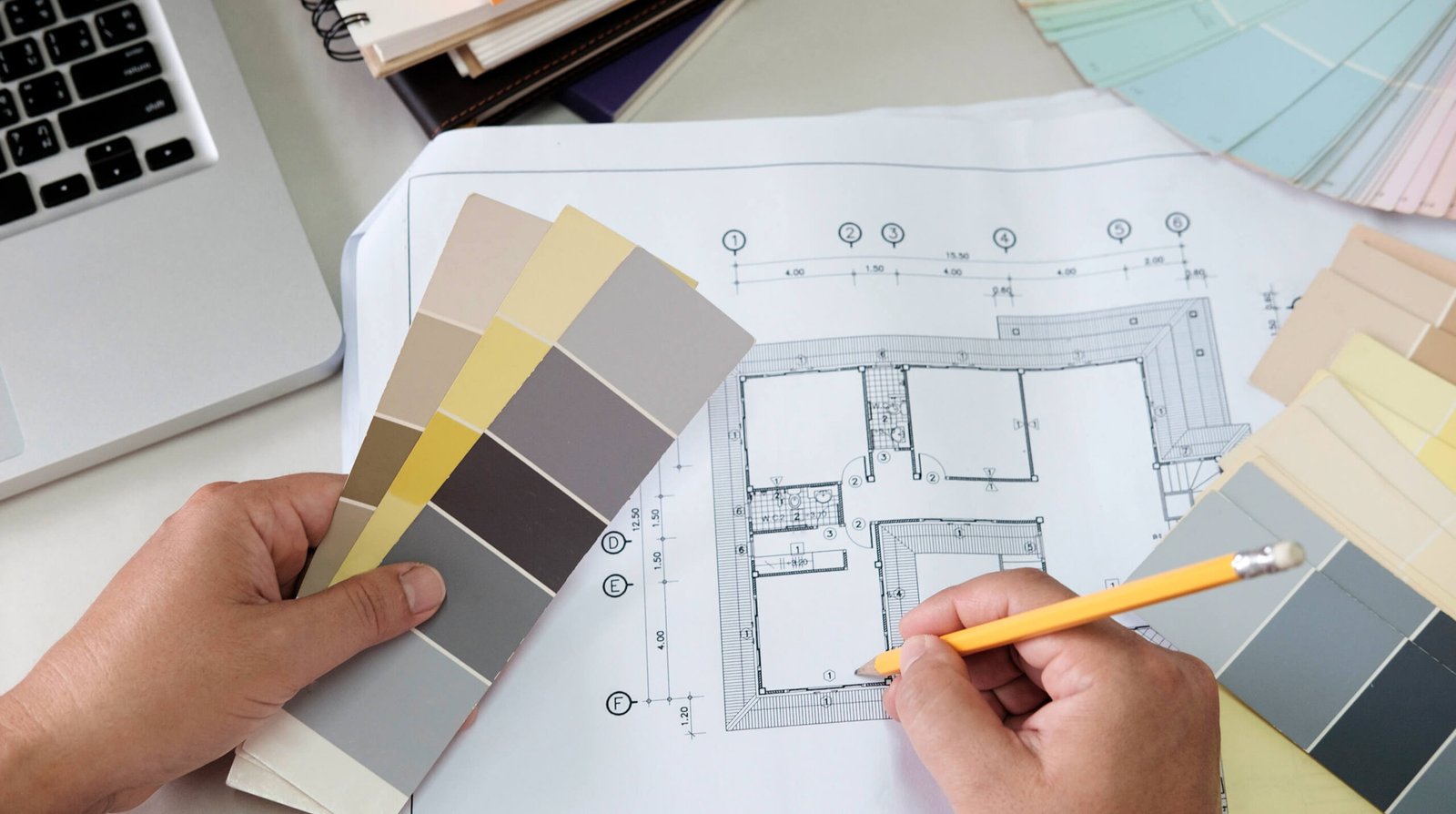
Once the groundwork is laid, it’s time to get inspired. We gather references from architecture, interior design trends, materials, art, and even nature. Mood boards, sketches, color studies, and material samples help visualize the direction of the project.
This is where creativity starts to flow—and where your space begins to take shape conceptually.
Developing the Design Concept
All ideas come together into a clear design concept. This concept acts as a roadmap for the entire project, defining:
- The overall theme or style
- The emotional tone of the space
- Key design elements and principles
Whether it’s modern minimalism, warm contemporary, or timeless elegance, the concept ensures consistency and clarity throughout the design journey.
Design Development: Turning Ideas into Reality
With a strong concept in place, we move into the design development phase. This is where abstract ideas become tangible plans.
Space Planning and Layout
We start by creating detailed floor plans that optimize space, circulation, and functionality. Every wall, doorway, and pathway is carefully considered to ensure smooth movement and efficient use of space.
Good space planning enhances comfort, usability, and visual balance—especially in interior architecture, where structure and design go hand in hand.
Colors, Materials, and Textures
Next comes one of the most exciting parts: selecting colors, textures, and materials. These elements define the mood of the space and bring depth and character to the design.
We consider:
- Color psychology
- Durability and maintenance
- Sustainability and material performance
- How materials interact with light
The goal is to create a palette that feels cohesive, timeless, and aligned with the original concept.
Furniture, Lighting, and Fixtures
Furniture and lighting are not just decorative—they shape how a space is experienced. We carefully select pieces that balance comfort, scale, and style.
Lighting is especially critical. Layered lighting—ambient, task, and accent—enhances functionality while highlighting architectural features and design details.
Designing for Flow and User Experience
A well-designed interior should feel effortless. During this phase, we evaluate how people move through the space and interact with it. Sightlines, transitions between rooms, and ergonomic considerations all play a role in creating an intuitive and enjoyable environment.
Design Finalization: From Vision to Execution
The final phase focuses on refining, detailing, and preparing the design for implementation.
Client Feedback and Refinement
Collaboration is key. We present the developed design and gather your feedback. Adjustments are made to ensure the final outcome truly reflects your vision while maintaining design integrity.
This step builds confidence and clarity before moving into execution.
Detailed Drawings and Specifications
Interior architecture requires precision. We produce detailed drawings, 3D visualizations, and technical specifications that guide contractors and suppliers. These documents ensure accuracy, efficiency, and quality during construction and installation.
Budget and Timeline Finalization
A great design should also be realistic. We finalize the budget, material selections, and project timeline, ensuring transparency and alignment among all stakeholders. This structured approach minimizes surprises and keeps the project on track.
Why the Design Process Matters
The conceptual and design process isn’t just a series of steps—it’s what transforms a space into an experience. It ensures that every decision is intentional, every detail has purpose, and the final result is both beautiful and functional.
At Anant Design Studio, we see interior architecture as a balance of art and strategy. By respecting the process, we create spaces that inspire, perform, and stand the test of time.
Whether you’re designing a home, office, or commercial environment, remember: great design is a journey—and it all starts with a strong concept.
✨ Ready to begin yours? Let’s design something extraordinary together.